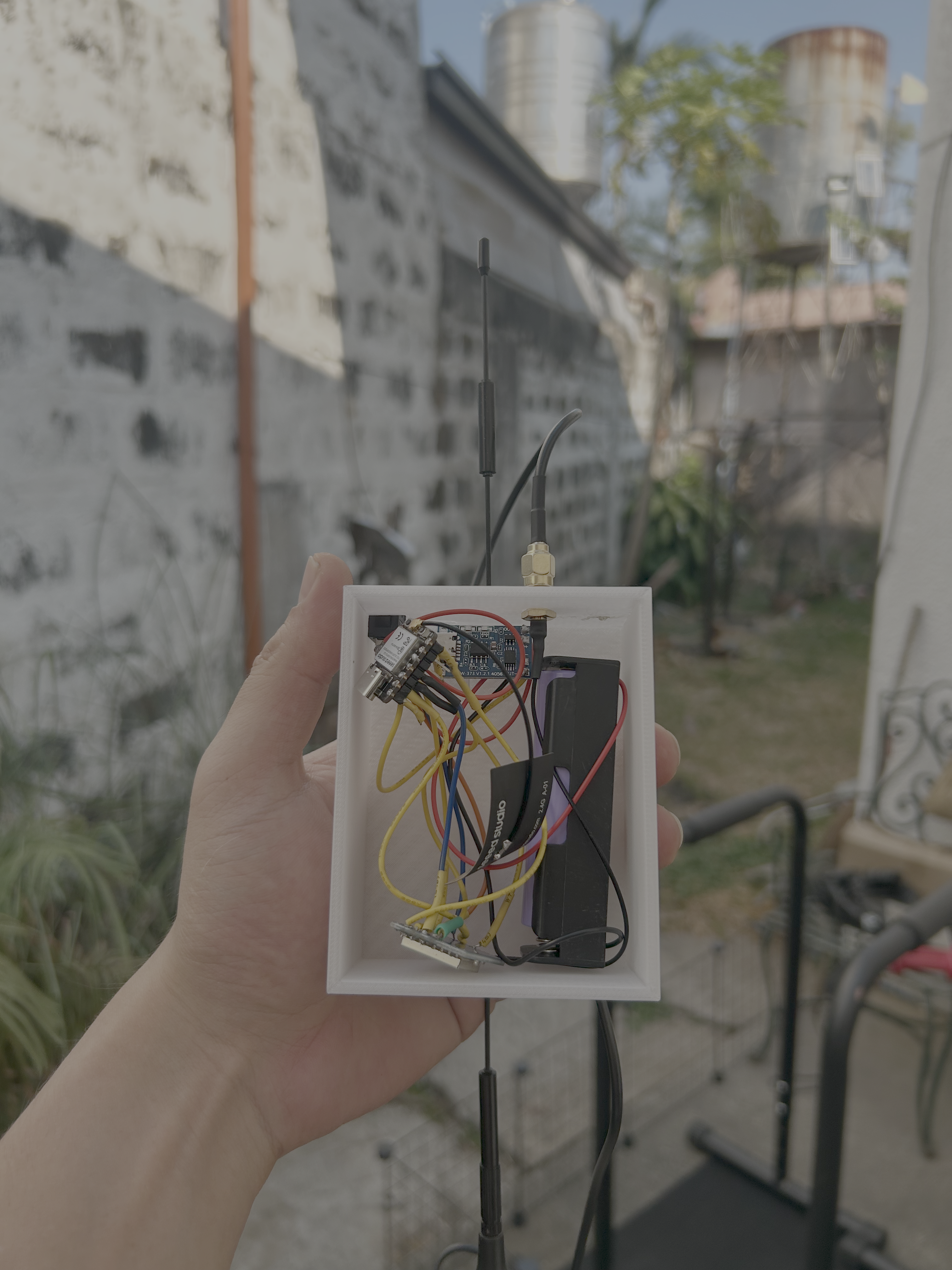
Node 1 - XIAO ESP32-C3 + SX1278 Ra-02, April 2026
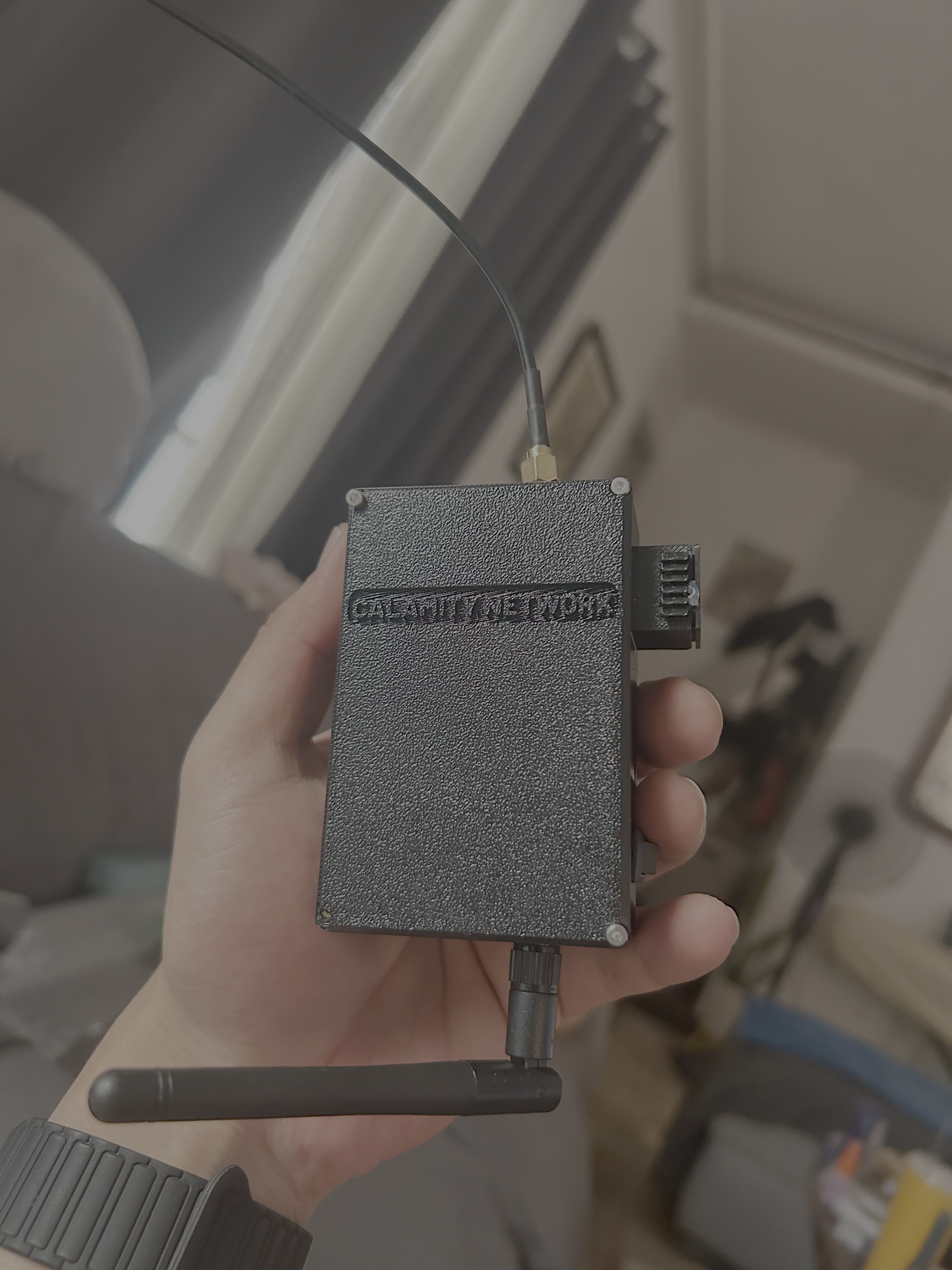
Node 2 - April 2026
Deployable Disaster Communications & Situational Awareness
A low-cost, open-source mesh network that keeps civilians and response teams connected when cell towers go down. No app, no training, no internet required.
Follow the BuildCalamity Network is a set of small solar-powered boxes that you install around a community before disaster season.
When a disaster hits and cell service disappears, those boxes create their own local network. Residents connect to a familiar WiFi name on their phone, fill out a short form, and their status reaches the response team. The team sees real-time sensor readings from every box: flooding, gas, air quality. They can send messages back, or trigger a voice alert through a speaker mounted at the nearest community landmark. The whole thing runs on a small battery and a solar panel and costs less than ₱2,500 per node to build.
Node 1 - XIAO ESP32-C3 + SX1278 Ra-02, April 2026
Node 2 - April 2026
Solar-powered nodes go up around the area: ground-level access pods for civilians, backbone relays on rooftops, and a command device for the response team leader. They power on and form a mesh automatically.
When disaster hits, civilians connect to the nearest WiFi node like they would any hotspot. A simple form lets them report their status. Speaker nodes broadcast voice alerts in Filipino. No phone needed to hear them.
The response team sees a live dashboard on their handheld command device: civilian reports, sensor readings from every node, and the ability to broadcast back to all pods and trigger alerts across the network simultaneously.
The civilian entry point. Creates a local WiFi hotspot. Residents connect on any phone, no app needed. Onboard sensors measure temperature, humidity, rain intensity, air quality, and gas levels. Runs on solar and a modular battery pack. 3D-printed weatherproof enclosure.
A standalone speaker unit mounted at community centers, chapels, and street intersections. Receives alert codes over the mesh and plays pre-recorded voice messages in Filipino or local dialect. Alarm tone, spoken instructions, WiFi hotspot name. No civilian device required. The alert comes to them.
The relay layer. Mounted high on rooftops or towers, these nodes form the LoRa mesh that carries all traffic between pods and command. Higher-gain antenna, solar powered, no civilian interaction. Can be drone-deployed to high points in the field.
A rugged handheld device carried by the response team leader. Live dashboard showing all civilian reports, sensor readings from every pod, and node status across the network. Physical keyboard for composing broadcasts. Can trigger voice alerts on all Alert Receiver Nodes simultaneously with a single command.
A drone-mounted node for rapid coverage of dead zones that ground infrastructure can't reach in time. Hovers at elevation, extends the WiFi and LoRa mesh, and returns when battery is low. Designed for the first hours of a response when geography blocks ground deployment.
The same mesh infrastructure. Extended to other calamities.
Acoustic sensors detect mosquito wingbeat frequencies to identify Aedes aegypti presence. Combined with rainfall, humidity, and standing water data already captured by the network, Vector Watch maps dengue outbreak risk at the neighborhood level before cases spike. Drone deployment drops sensor pods into hard-to-reach breeding zones: drainage canals, abandoned lots, flood recession areas. The drone returns; the pod stays and reports.
Target: Rainy season 2027Accelerometer-equipped nodes detect P-wave arrivals and ground motion. Distributed across a municipality, the network triangulates epicenter location and estimates magnitude within seconds, faster than centralized systems can push alerts to remote communities.
Target: 2027Acoustic and vibration sensors positioned along river channels near active volcanoes detect lahar flow signatures before the debris reaches downstream communities. Paired with Alert Receiver Nodes for immediate voice evacuation warnings.
Target: Pilot near Mt. Pinatubo or Mayon, 2028Built for humanitarian organizations, disaster response agencies, and local government units. Cheap enough to deploy at scale. Documented for field operators, not engineers.